

Wasp Control in Northern Colorado
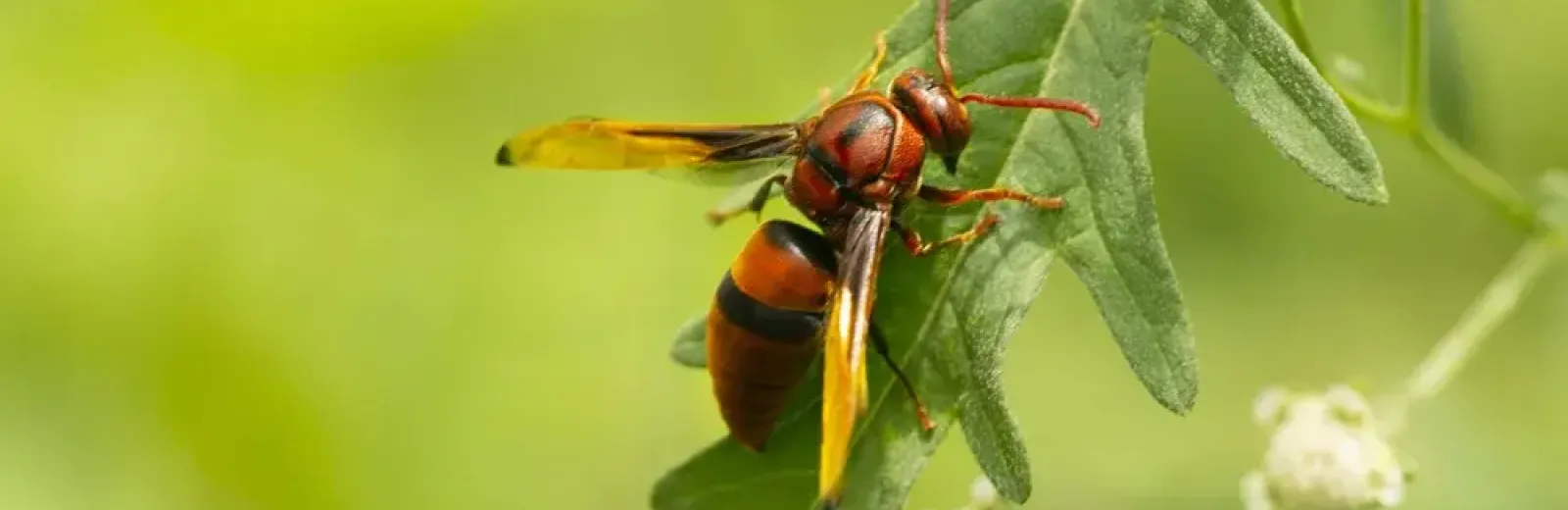
A single wasp nest can make your entire outdoor space off-limits. In Northern Colorado, wasp populations surge through summer and reach their most aggressive peak in late August and September — right when you want to be outside most.
Do Not Attempt DIY Nest Removal
Disturbing a yellow jacket ground nest or bald-faced hornet colony without proper equipment and training can trigger a mass stinging event. Unlike honeybees, wasps can sting repeatedly and release alarm pheromones that cause the entire colony to attack. Leave nest removal to a trained professional.
- Stinging Hazards: Wasps sting without provocation when they feel their colony is threatened. Ground-nesting yellow jackets are especially dangerous near lawns — mowing, kids playing, or even walking nearby can trigger an aggressive, multi-sting response.
- Tree & Shrub Nesting: Paper wasps and bald-faced hornets build exposed nests in trees, shrubs, and hedgerows. Large nests in ornamental plantings make routine lawn maintenance and pruning impossible — and removal requires protective equipment and the right treatment approach.
- Outdoor Living Disruption: A wasp nest near a patio, deck, or play area effectively shuts that space down for the season. Yellow jackets are also attracted to outdoor dining and can overwhelm gatherings quickly, making your yard inhospitable for the entire family.
- Allergy & Medical Risk: For individuals with venom allergies, a single wasp sting can trigger anaphylaxis — a life-threatening emergency. Even those without known allergies can develop reactions over time. Having active nests near your home or play areas is a serious health risk that requires prompt action.

Stinging Insects Found in Northern Colorado
The treatment approach differs significantly by species. Knowing exactly what you're dealing with is the first step toward safe, effective removal. Our technicians identify the species before recommending any treatment plan.
- Western Yellow Jacket — High Aggression: The most dangerous stinging insect in Northern Colorado. Yellow jackets nest underground — often in abandoned rodent burrows in your lawn — and defend their colonies violently. Colonies can reach 5,000+ workers by late summer. Ground-level activity during lawn care is the most common trigger for mass stinging incidents.
- Bald-Faced Hornet — High Aggression: Despite the name, this is technically a large yellow jacket. Bald-faced hornets build the iconic large, gray paper nests in trees, shrubs, and under eaves. They defend a wide perimeter around their nest and can sting multiple times. Nests in landscape plantings are especially common in Northern Colorado's wooded residential areas.
- Paper Wasps — Moderate Aggression: Paper wasps build small, open-comb nests in tree branches, under eaves, and in ornamental shrubs. Less aggressive than yellow jackets, they will sting when nests are disturbed. Multiple colonies can establish within the same landscaping, especially in sheltered planting beds near structures.
- Cicada Killer Wasp — Low–Moderate Aggression: Large, intimidating wasps that burrow into dry, sandy lawn areas and landscaping beds to provision nests with paralyzed cicadas. While not aggressive toward humans, large populations create extensive burrowing damage to turf and are alarming in appearance. Common in well-draining Northern Colorado soils through midsummer.
- Mud Dauber — Low Aggression: Solitary wasps that construct mud tube nests on structures, fences, and outdoor furniture. While generally not aggressive, their nests are unsightly and can appear in large numbers on outdoor hardscape features. They frequently nest in retaining walls and decorative stone landscaping.
- European Hornet — High Aggression: The only true hornet established in Colorado, increasingly found along the Front Range. European hornets nest in hollow trees — making them a direct concern for properties with mature landscape trees. Active at night as well as during the day, they are highly aggressive defenders and pose a serious risk near tree work.
Our Approach to Wasp Control
As lawn and tree care specialists, we approach wasp control differently than a general pest company. Every treatment is performed with your landscape's health in mind, protecting your turf, trees, and beneficial insects while eliminating dangerous nests.
- Full Property Nest Inspection: Our technician performs a thorough inspection of your lawn, trees, shrubs, landscape beds, and hardscape features — identifying all active nests and high-risk areas. We identify the species present before recommending any treatment, so the approach is always targeted and appropriate.
- Ground Nest Elimination: Yellow jacket ground nests are treated with dust or liquid insecticide injected directly into the colony entrance, eliminating the nest at the source. Treatment timing is carefully managed — applications are performed in the early morning or evening when foragers are in the nest and activity is lowest.
- Aerial & Tree Nest Removal: Paper wasp and bald-faced hornet nests in trees, shrubs, and ornamental plantings are treated and removed using appropriate protective equipment. Our technicians are trained to work safely near nesting colonies — and we coordinate with our tree care team when nests are in or near trees requiring additional attention.
- Perimeter & Landscape Deterrents: After active nest elimination, we apply residual treatments to high-risk areas — tree lines, bed perimeters, hardscape features, and lawn edges — to discourage re-nesting and reduce foraging pressure around your outdoor living spaces throughout the season.
- Tree Health Integration: Hollow or structurally compromised trees are magnets for wasp colonization. When our technicians identify at-risk trees during wasp inspections, we flag them for our tree care team — so you can address the underlying vulnerability, not just the immediate nest.
- Seasonal Prevention Program: Spring is the best time to disrupt wasp colonies before they grow large and aggressive. Our seasonal prevention program includes early-season inspection and treatment of known nesting areas — stopping colonies from establishing before they become a hazard in late summer.
Cities We Service
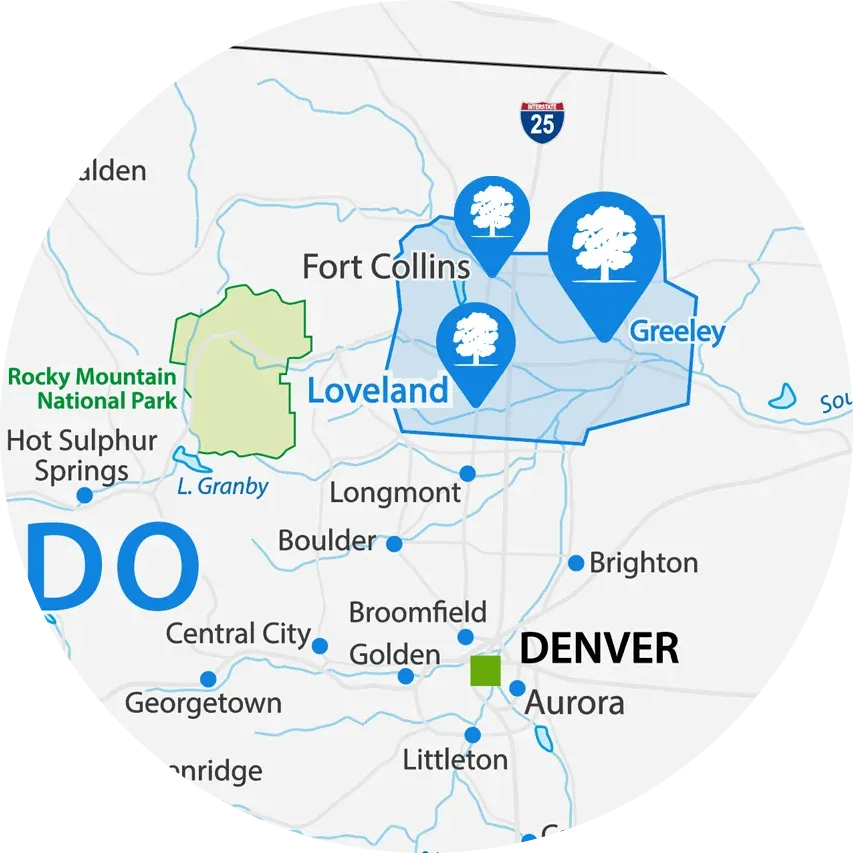
Our experts know exactly what it takes to care for your property. Our team has been proudly serving our neighbors in Northern Colorado since 1982. Not sure if we service your neighborhood? Check out the map or give us a call!